


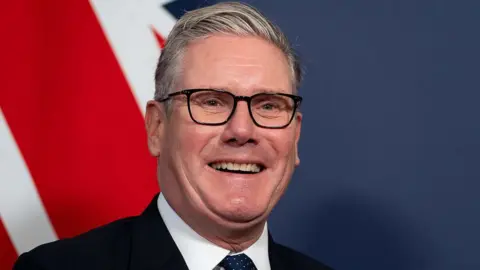
 Image Source
The Premier's particularly significant reorientation on the United Kingdom's following Brexit connections to the bloc recently was crafted to send a message to business, to European institutions, and to European partners, as well as his party members.
A Revised Approach for Dialogue
Tighter after-Brexit trade links are currently anticipated to be considered as within an regular schedule of bilateral talks instead of just at this year's formal review of the UK-EU deal.
This represented the clear response to parliamentary pressure regarding a broader post-Brexit overhaul that involved re-entering the customs union.
Political Pressure
Some MPs, trade union officials and cabinet ministers have lent support to proposals crystallised by legislative actions last year that culminated in a symbolic resolution.
"We are better focusing on the European single market instead of the customs union for our further alignment," the leader remarked.
He provided a definitive response that rejoining the tariff union was not the current focus, as it goes against what he views as a major accomplishment of the last twelve months: the signing of best-in-class deals with the America and the Indian subcontinent, with further to come in the Gulf region.
Emphasising the Internal Market
Instead of the customs union, his emphasis is on forging a "closer relationship" with the single market, which would avoid tearing up those recently signed agreements globally.
When the UK officially exited the EU in the start of 2021, the agreement at the time stressed independence from EU standards over seamless commerce for UK businesses in EU nations.
The present reset proposes synchronising with EU rules in specific fields to facilitate the smoother movement of trade: agri-food goods, power, and carbon trading.
Business Calls
A leading commercial body last month released a detailed set of new proposals in other sectors to help exporters overcome post-Brexit red tape that has impacted the goods trade.
Its own survey indicated that a significant number of business members believed that the current arrangement was failing to support commercial success.
A range of additional sectors could, feasibly, see a parallel method – harmonisation with EU regulations – in as a trade-off for reducing trade obstacles across production, in automotive, chemicals, or for example in VAT procedures.
European Reaction
EU governments were underwhelmed by the modest aims in earlier discussions, specifically the London's refusal of suggestions advanced by some analysts regarding the effective return of British exports to the internal market.
The specific detail on electricity and food and farm standards is remains to be settled. A initiative for UK manufacturers to be participate in a €150bn security initiative has stalled over the scale of the membership fee, after some objections from the French government. Another nation has joined the initiative.
Wider Context
The UK has concluded arrangements to return to a academic exchange programme and to continue talks on a youth mobility program. This has facilitated progress for subsequent negotiations.
Some UK insiders say that the release last month of a Washington policy paper has shifted the environment on UK relations with Europe.
The document stated that the US would "encourage pushback" to Europe's current trajectory and commended the "rising power" of nationalist groups.
In government circles, there is a growing awareness that the global landscape has changed again.
Home Considerations
At home, the governing party also foresees being challenged on Brexit not only one opposition party, but potentially a further party, which is targeting its traditional heartlands in local votes.
The Prime Minister's recent words are the product of a confluence of business needs, domestic pressures and global dynamics as the UK embarks upon a year that will commemorate the 10th anniversary of the landmark EU vote.


